
small business owner reviewing best ai tools for small business on a laptop
The Best AI Tools for Small Businesses in 2026, by Department
8 min read
This guide breaks down the best AI tools for small businesses in 2026 by department, covering sales, support, admin, marketing, and finance, with real pricing for tools like ChatGPT, Claude, QuickBooks, and Zapier. It also explains when off-the-shelf subscriptions stop scaling and a custom AI build or strategy consulting becomes the smarter investment.
Most small business owners waste hours each week on tasks a $20 tool could handle. The best AI tools for small business in 2026 are not experimental anymore, they are practical, affordable, and department-specific. This guide breaks down real picks for sales, support, admin, marketing, and finance, plus pricing and when a custom build makes more sense than another subscription.
What Makes an AI Tool Worth Paying For in 2026
A good AI tool saves more time than it costs to learn. Therefore, the best test is simple: does it remove a repetitive task within the first week? If not, it is probably not worth the monthly fee.
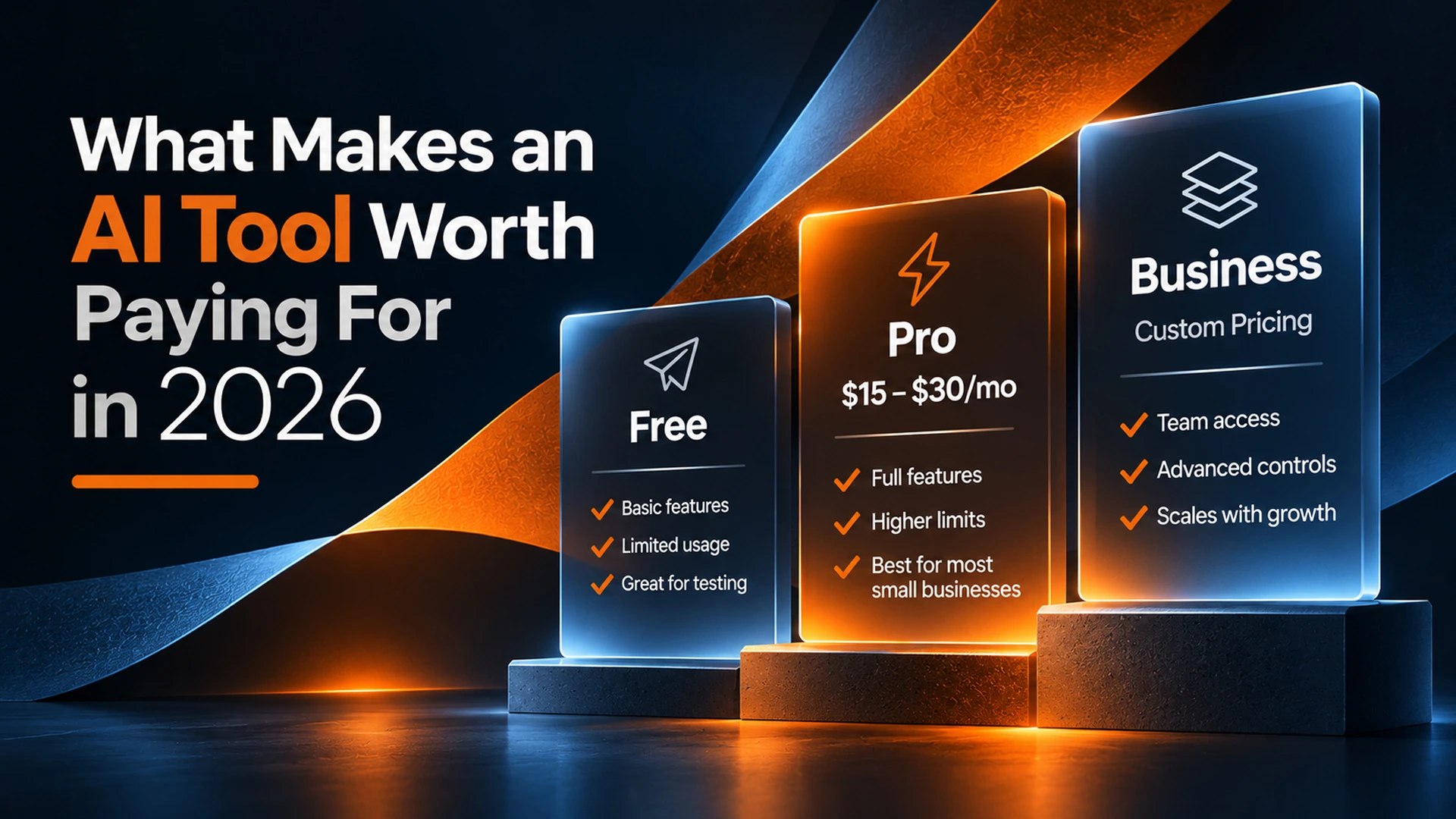
Small business ai software has matured fast. Most tools now offer a free tier, a per month pricing plan around $15 to $30, and a business plan with higher usage limits. Before you buy, ask three questions:
- Does it integrate with tools you already use, like your CRM or Google Workspace?
- Can your team learn it in under an hour?
- Does the vendor show a clear security and data policy?
If a tool fails two of these, keep looking. In addition, always test with real company data before rolling it out to the whole team.
Best AI Tools for Sales and Lead Generation
AI tools for lead generation now do more than draft emails. The strongest ones qualify leads, score them, and route hot prospects straight to a rep. For example, pairing ChatGPT or Claude with a CRM can cut manual follow-up time significantly.
Top Picks for Sales Teams
| Tool | Best For | Starting Price |
|---|---|---|
| ChatGPT (Plus/Team) | Drafting outreach, proposals, call summaries | $20 per month |
| Claude | Longer research and contract review | $20 per month |
| HoneyBook | Client management for service businesses | $19 per month |
However, generic chat tools stop short of true lead qualification. An ai-powered lead qualification system built around your sales criteria, which we cover at OCImagine's AI services, can score leads automatically and alert your team the moment someone is ready to buy.
comparing ai tools for small business 2026 pricing tiers
Best AI Tools for Customer Support
Customers expect fast answers, even outside business hours. An AI chatbot can resolve common questions instantly, while a voice tool like ElevenLabs handles natural-sounding phone responses for businesses that still rely on calls.
Consequently, many Orange County small businesses now combine a chatbot for web inquiries with a simple ticketing system for anything complex. This hybrid setup keeps response times low without replacing your human team.
Support Tools Worth Testing
- AI chatbots for website and SMS inquiries
- ElevenLabs for AI voice and phone automation
- ClickUp with AI features for ticket tracking
Since support volume grows with your business, start small. Test one chatbot flow before automating your entire intake process.
Best AI Tools for Admin and Back-Office Work
Admin work eats the most hours in a small business, yet it is the easiest to automate first. Notion AI, Google Workspace, and Zapier together cover scheduling, document drafting, and data syncing between apps.
Scheduling and Documentation
Notion AI summarizes meeting notes and drafts internal documents in seconds. Meanwhile, Google Workspace's built-in AI features help with email drafts and spreadsheet formulas, so your team spends less time on formatting and more time on decisions.
Workflow Automation
Zapier connects hundreds of apps without any code. For instance, a new form submission can automatically create a task in ClickUp and send a welcome email, all without a staff member touching it. This kind of automation tools setup often pays for itself within the first month.
ai chatbot tool for small business customer support
Best AI Tools for Marketing Teams
Small marketing teams now compete with larger companies because AI tools for lead generation and content creation level the playing field. Canva's AI design features let a single person produce weeks of social content in an afternoon.
ChatGPT handles blog drafts, ad copy, and email sequences, while Zapier automates the posting schedule across platforms. As a result, a two-person marketing team can run campaigns that once required five.
Marketing Stack Example
- Canva for graphics and short video edits
- ChatGPT for copywriting and content outlines
- Zapier for scheduling and cross-platform posting
Still, these tools work best when someone reviews the output. AI drafts the first version; your team adds the local voice and brand judgment that keeps content authentic.
Best AI Tools for Finance and Bookkeeping
Finance is one area where AI tools for small business have quietly become essential. QuickBooks now flags unusual transactions automatically, while Stripe's AI fraud detection protects payment processing without extra setup.
Furthermore, these tools reduce the manual reconciliation work that used to take hours each month. A bookkeeper can review flagged items instead of checking every transaction line by line.
Finance Tools to Consider
| Tool | Function | Starting Price |
|---|---|---|
| QuickBooks | Automated bookkeeping and expense categorization | $35 per month |
| Stripe | Payment processing with built-in fraud detection | Pay-per-transaction |
Because financial data is sensitive, always confirm a tool's compliance certifications before connecting it to your bank accounts.
ai tools for lead generation and marketing automation
When a Custom Build Beats an Off-the-Shelf Tool
Off-the-shelf small business ai software works well until your workflow gets complex. For example, if you need a legacy CRM upgrade, multi-system data syncing, or an AI agent trained on your specific intake process, a subscription tool usually cannot flex that far.
Custom AI development makes sense when you hit any of these signs:
- You are paying for three or more tools just to connect your CRM and calendar
- Your lead qualification rules are too specific for a generic chatbot
- You need HIPAA or industry-specific compliance built into the workflow
- Your team manually re-enters the same data across multiple platforms
At that point, a tailored ai strategy consulting engagement costs more upfront but saves far more over time. OCImagine's AI strategy consulting services start with an audit of your current stack before recommending a build, so you never pay for automation you do not need. Similarly, our AI automation services connect your existing tools into one seamless workflow, instead of forcing your team to juggle five logins.
Ready to find your department's quick win? Review your current stack against the sales, support, admin, marketing, and finance tools above before adding another subscription.
Choosing the Right Path for Your Business
Every small business reaches a point where generic tools stop scaling. Therefore, the smartest move is testing the best ai tools for small business in low-stakes areas first, like drafting content or scheduling, before automating anything customer-facing.
If your business has outgrown off-the-shelf tools, OCImagine can map out whether a combination of existing software or a custom automation build fits your 2026 goals best. A short strategy call often clarifies more than another month of trial subscriptions.
Frequently Asked Questions
Which AI tool is best for a small business in 2026?
There is no single best tool because needs vary by department. ChatGPT or Claude work well for drafting outreach and content, QuickBooks handles bookkeeping with automated fraud flags, Canva covers design, and Zapier ties apps together without code. The right choice depends on which repetitive task is costing your team the most time right now.
What are the best free AI tools for small business owners?
Most of the tools covered here, including ChatGPT, Claude, Canva, and Notion AI, offer a free tier before you need to upgrade. These free versions are usually enough to test whether a tool removes a repetitive task within the first week, which is the simplest way to decide if it is worth paying for later.
How much do AI tools for small business typically cost?
Most small business AI software falls between $15 and $30 per month per tool, with QuickBooks starting around $35 per month and Stripe charging per transaction instead of a flat fee. Costs add up quickly if you are running three or more subscriptions just to connect your CRM, calendar, and support inbox, which is often the point where a custom automation build becomes cheaper long term.
Can AI tools replace a CRM or lead qualification process?
Generic chat tools like ChatGPT or Claude can draft outreach and summarize calls, but they stop short of true lead qualification. For automatic lead scoring and routing hot prospects to a rep, you need a system built around your specific sales criteria, which usually means pairing AI with your existing CRM or investing in a custom lead qualification setup.
When should a small business build a custom AI tool instead of using a subscription?
A custom build makes sense once you are paying for three or more tools just to connect basic systems, your lead qualification rules are too specific for a generic chatbot, you need industry-specific compliance like HIPAA built into the workflow, or your team keeps re-entering the same data across platforms. At that point, a tailored strategy costs more upfront but saves significantly more over time than stacking subscriptions.
What AI tools work best for customer support in a small business?
An AI chatbot handles common web and SMS inquiries instantly, while a voice tool like ElevenLabs manages natural-sounding phone responses for businesses still relying on calls. Many small businesses combine a chatbot with a simple ticketing system like ClickUp for anything too complex for automation, which keeps response times low without replacing the human team.
Are AI tools secure enough for handling financial or customer data?
Reputable tools like QuickBooks and Stripe include automated fraud detection and compliance certifications, but you should always confirm a vendor's security and data policy before connecting it to bank accounts or customer records. If a tool can't clearly explain its data handling practices, that is a reason to keep looking rather than roll it out to your whole team.

