AI Customer Intake Automation for Service Businesses


AI customer intake automation dashboard for service businesses
13 min read
AI customer intake automation enables service businesses to streamline first contact, data collection, and customer routing by leveraging chatbots, smart forms, and automated workflows. The technology delivers measurable benefits including 24/7 availability, reduced costs, improved data accuracy, and enhanced customer experience. The article provides a practical implementation roadmap alongside guidance on team development and ROI measurement.
Service businesses face growing pressure to respond faster while keeping quality high. Traditional intake processes create bottlenecks. These bottlenecks frustrate customers and overwhelm staff. However, AI customer intake automation turns these problems into real advantages.
Modern businesses use artificial intelligence to speed up their customer onboarding process. Also, AI reduces manual work and improves service quality. As a result, businesses in Orange County are using AI solutions to stay ahead in today’s fast market. This guide explores how service businesses can set up AI customer intake automation and make it work.
What Is AI Customer Intake Automation
AI customer intake automation uses artificial intelligence to manage first contact with customers. It also handles information gathering without manual work. So, businesses can capture, process, and route customer inquiries on their own.
The system collects customer data through chat tools, smart forms, and automated workflows. For example, natural language processing helps chatbots understand what a customer needs. In addition, machine learning improves response accuracy over time by learning from real interactions.
AI systems can qualify leads, book appointments, and send follow-up messages. They also connect with your existing business tools in real time. This full approach makes sure every customer gets a reply while cutting down the workload on staff.
Furthermore, AI intake automation works across different channels. Whether customers prefer text, voice, or a mobile app, the system keeps service quality the same. This flexibility is key for businesses that serve a wide range of customers.
Key Benefits of Automated Customer Intake
Setting up AI customer intake automation brings clear benefits for both customers and staff. Also, these benefits grow over time as the system learns and gets better. This makes it a strong long-term investment for career growth and business success.
Time savings are the first thing most service businesses notice. Automated systems work 24/7 with no breaks or sick days. So, customers get fast replies no matter when they reach out. This always-on availability boosts customer satisfaction and lowers drop-off rates.
Data accuracy also improves with AI automation. Human error during data entry causes problems that take time and money to fix. However, AI systems check information in real time and keep data quality high. This leads to better project success across the board.
Cost savings happen in many ways. First, staff spend less time on repetitive tasks. Second, the system reduces the need to hire more admin staff as the business grows. As a result, businesses can focus resources on high-impact work instead.
Customer experience gets better too. AI systems remember past interactions and preferences. Moreover, this creates a smooth, personal experience that builds trust. A consistent experience across all channels also strengthens your brand.
Growth is another big win. Businesses can handle more customers without adding more staff. This matters most during busy seasons or periods of fast growth. Because of this, automated intake is a smart tool for any growing service business.

Comparison of manual vs automated customer intake processes
Essential Features of AI Intake Systems
Good AI customer intake systems have several core parts that work together. Understanding these features helps you pick the right solution. It also helps you get the most from your portfolio strategy and business tools.
Chatbots are the main point of contact for customers. These smart assistants handle first questions, collect basic information, and send customers to the right team. Also, advanced chatbots keep the flow of conversation natural and easy to follow.
Smart form technology fills in fields based on what the customer types. For example, entering a phone number might pull up an address from existing records. In addition, the system checks information as customers enter it to prevent mistakes.
- Smart form processing with auto-fill
- Natural language chatbot for first contact
- Automated workflow routing and task assignment
- Real-time data checks and verification
- Easy connection with CRM and other tools
- Smart follow-up and nurture sequences
- Mobile app access for on-the-go management
Connection with other tools is also key. Customer data flows right into CRMs, project management platforms, and billing systems. So, there is no need to move data by hand. This saves time and removes data gaps between teams.
Analytics tools show how customers behave and how well the system works. Moreover, businesses can spot slow points, track conversion rates, and improve the intake process with real data. These insights support better decisions and stronger career paths for your team members.
Custom options let businesses shape the system to fit their brand and skill set. The AI assistant can reflect your company’s voice and handle industry-specific terms. This keeps your brand consistent from the first customer touchpoint to the last.
Implementation Steps for Service Businesses
Setting up AI customer intake automation takes clear planning and a step-by-step approach. However, following a proven process makes the rollout smooth and builds staff confidence. Good project management here leads to real project success.
First, map your current intake process and find the pain points. This helps you understand your workflows, data needs, and what tools to connect. It also shows where you can improve beyond just adding automation.
Next, compare AI platforms against your business needs. Look at cost, growth options, and vendor support. Orange County businesses often benefit from working with local AI experts who know the area’s market. These professional relationships can make a big difference in short-term results.
Then, design your workflows with a clear narrative approach. For example, a plumbing service might set up one workflow for urgent calls and another for regular maintenance requests. Also, plan for edge cases and when to hand off to a real person.
After that, test the system with a small group of customers before going fully live. This lets you fix issues without affecting everyone. Also, it gives your team a chance to learn and adjust their skill set.
Train your staff to work well with the AI system. Team members need to know when to step in and how to handle escalated questions. Good training leads to a strong work environment where humans and AI work together well.
Finally, roll out in phases. Start with simple requests, then expand to more complex ones. This step-by-step approach builds trust and allows for ongoing improvements across the career field.
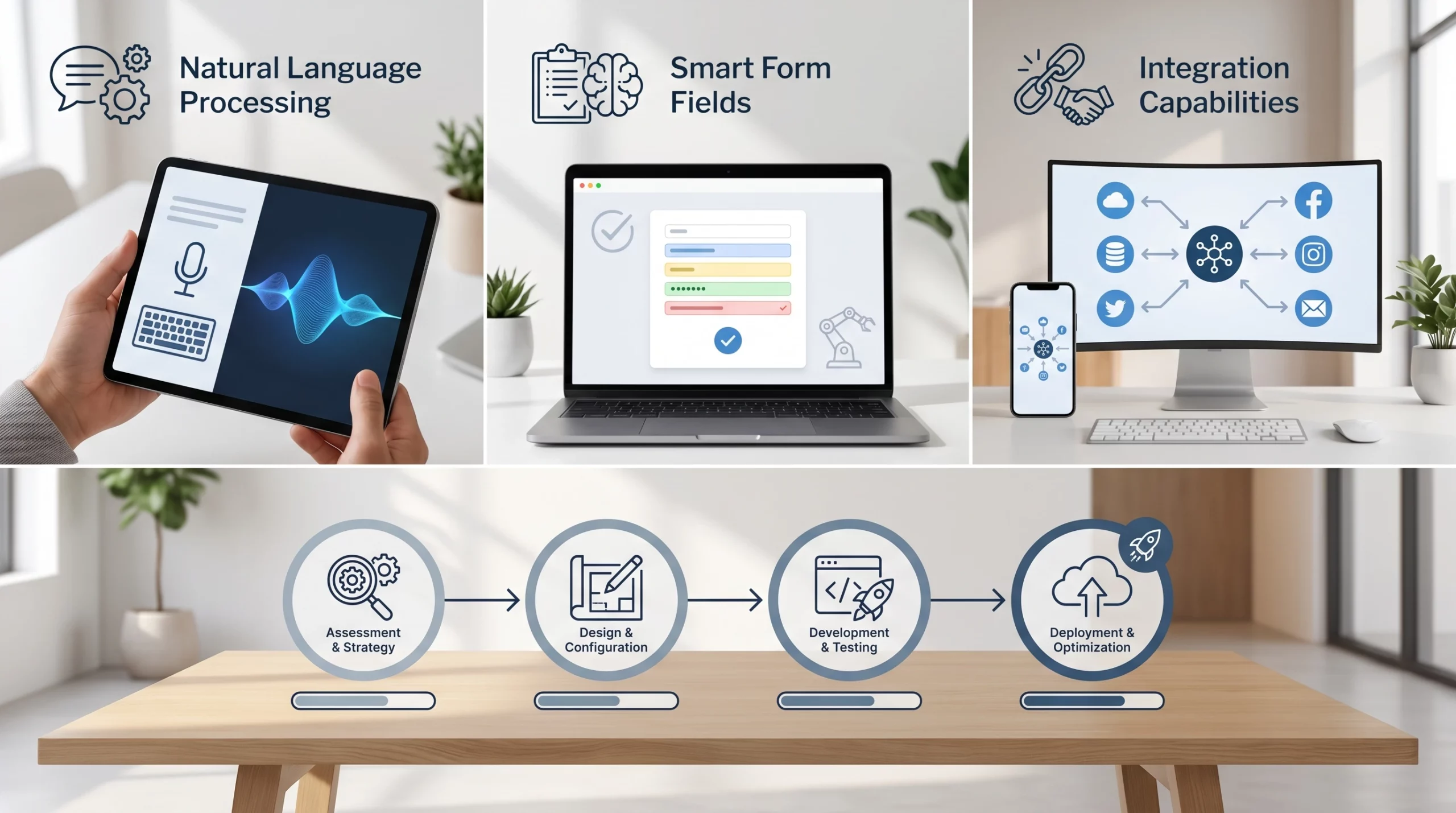
AI intake system features and implementation roadmap for businesses
Professional Development and Team Growth
AI intake automation also supports professional development for your team. When staff spend less time on data entry, they can focus on best creative work and high-quality customer interactions. This shift helps team members grow their skills in ways that matter.
Also, project management skills improve as staff learn to work alongside AI tools. For example, team members can take on a higher project title with more responsibility. They can guide customers through complex service requests that need a human touch.
Professional networking also benefits from this shift. Staff have more time to attend networking events and build professional relationships with clients and partners. These connections open new career paths and support long-term career goals.
In addition, a strong work environment attracts better talent. When people do meaningful, high-impact work, they stay longer. This reduces turnover and keeps your team strong across every career field.
Portfolio creation is another benefit for team members. Staff can document their best creative work and project success stories. A well-built portfolio strategy shows growth and opens doors to new opportunities in the United States and beyond.
Problem solving skills also grow when staff work with AI tools every day. For example, team members learn to spot patterns in customer data and fix gaps in the process. This is a valuable skill set in any work type, from admin roles to client-facing positions.
Personal and professional growth go hand in hand here. When staff feel supported and challenged, they do better work. As a result, your business delivers higher quality service at every step. This also supports graphic design teams and other creative roles that rely on strong intake data to do their jobs well.
Common Challenges and Solutions
Service businesses often run into the same problems when setting up AI intake automation. However, knowing these challenges ahead of time helps you solve them faster. Good problem solving here is a key skill set for any operations team.
Some customers, especially older ones, may prefer talking to a person. So, always offer a clear path to human help. Also, be open about what the AI can and cannot do. This honesty builds trust.
Connecting with many existing systems can get complex. Working with an experienced AI consultant makes this easier. These experts have seen common issues and know the best fixes. They also act as a guide for your team members during the transition.
Poor data quality can hurt system performance. Regular data checks and validation steps keep things running well. Also, setting clear data standards from the start prevents many issues down the line.
Too much automation can feel cold to customers. So, keep human touchpoints for key moments in the customer journey. Balance is important for maintaining strong professional relationships with your clients. A mutually beneficial experience keeps both sides happy.
Finally, staff may resist new systems. Clear communication about roles and benefits helps ease this. Involving team members in the setup process builds buy-in and reduces pushback.
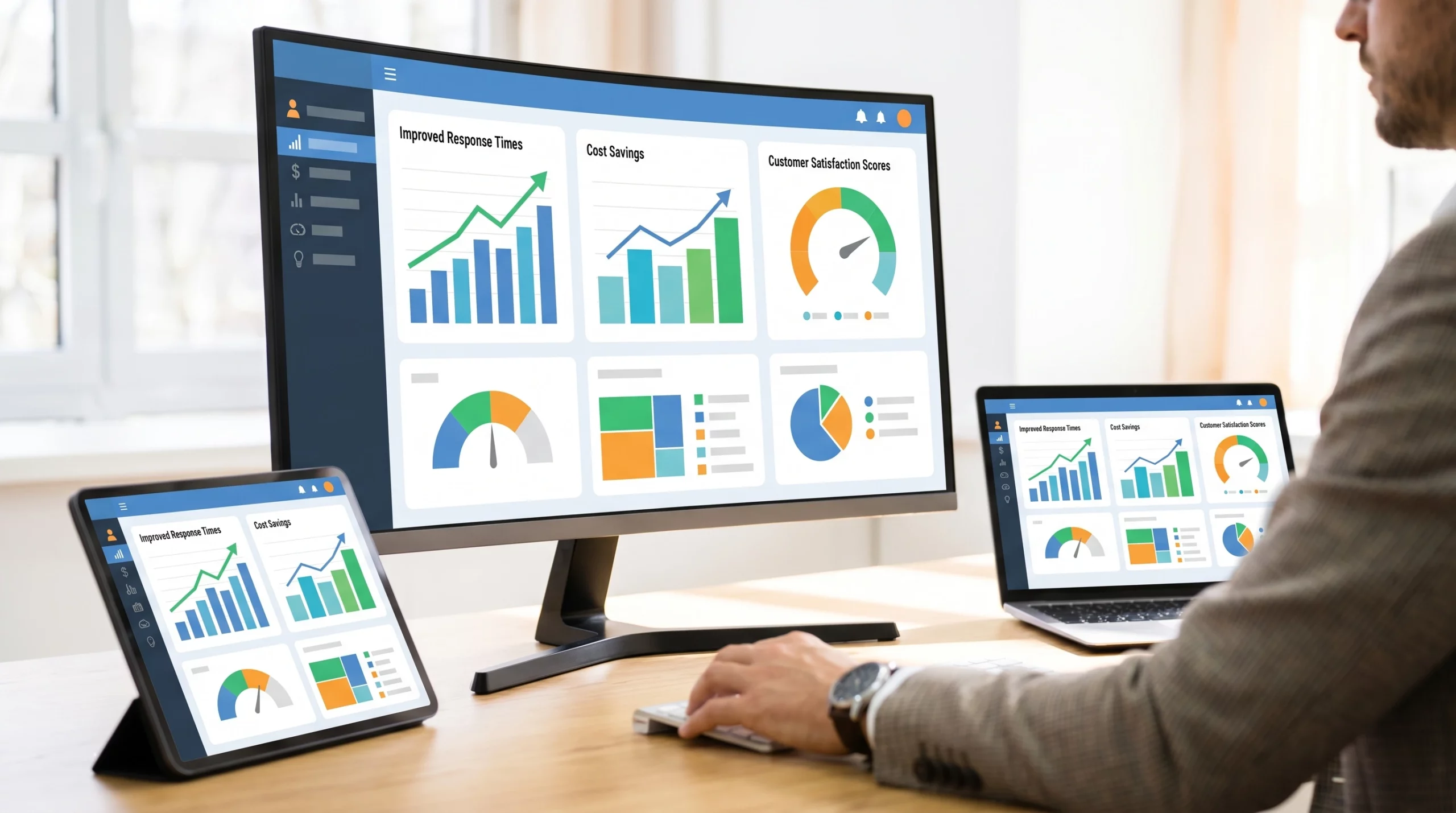
AI automation ROI dashboard showing business performance metrics
Measuring Success and ROI
Tracking the impact of AI intake automation shows what is working and what needs to change. So, set your baseline numbers before you launch and track changes over time. This supports smarter, data-driven decisions for short-term and long-term gains.
Response time is the first thing to watch. Automated systems cut first response times from hours to seconds. Also, they work around the clock, so customers always get a reply fast.
Cost savings should cover reduced labor, fewer errors, and time freed up for high-impact work. In many cases, businesses see a return on investment within six months. That is a strong sign the system is working as planned.
Customer satisfaction scores give you direct feedback. Track scores across different channels to spot weak points. Regular surveys make sure the system keeps meeting customer needs in the real world.
Conversion rates often go up with automated follow-ups and timely messages. As a result, more leads become paying customers. This directly supports revenue growth and helps meet career goals at the business level.
Employee satisfaction also tends to rise. Staff can focus on engaging, high-quality work instead of data entry. Less stress and more meaningful tasks lead to better retention and a healthier work environment.
AI customer intake automation is a powerful step forward for service businesses. However, success takes good planning, the right tools, and ongoing fine-tuning. Orange County businesses that partner with skilled AI experts gain a strong foundation for lasting growth in a competitive market. By combining smart tools with strong professional development, your team can reach new career paths and deliver the best creative work your clients have ever seen.
Frequently Asked Questions
What is AI customer intake automation and how does it work?
AI customer intake automation uses artificial intelligence to manage first contact with customers and gather information without manual effort. It collects customer data through chatbots, smart forms, and automated workflows. Natural language processing helps the system understand customer needs, while machine learning improves response accuracy over time. The system can qualify leads, book appointments, send follow-up messages, and integrate with existing business tools across multiple channels including text, voice, and mobile apps.
What are the main benefits of implementing AI intake automation for a service business?
The key benefits include round-the-clock availability with instant response times, improved data accuracy by eliminating human entry errors, significant cost savings by reducing repetitive administrative tasks, enhanced customer experience through personalized and consistent interactions, and scalability that allows businesses to handle more customers without adding staff. Over time, the system also learns and improves, making it a strong long-term investment.
What features should I look for in an AI customer intake system?
Essential features include a natural language chatbot for first contact, smart form processing with auto-fill capabilities, automated workflow routing and task assignment, real-time data validation, seamless integration with CRM and other business tools, intelligent follow-up and nurture sequences, mobile app access, and robust analytics to track customer behavior and system performance. Custom branding options are also important so the system reflects your company's voice and handles industry-specific terminology.
How do I implement AI customer intake automation in my service business?
Start by mapping your current intake process and identifying pain points. Next, evaluate AI platforms based on cost, scalability, and vendor support. Design your workflows with clear paths for both standard requests and edge cases, including human handoff scenarios. Test the system with a small customer group before a full launch, train your staff to collaborate effectively with the AI, and roll out in phases—beginning with simple requests before expanding to more complex ones. This phased approach builds confidence and allows for iterative improvements.
How can AI intake automation support employee professional development?
By handling repetitive data entry tasks, AI automation frees staff to focus on high-impact customer interactions and complex problem-solving. Team members can develop project management skills, take on greater responsibilities, and build stronger professional relationships with clients. They also gain time to attend networking events, document portfolio-worthy work, and develop pattern-recognition skills by working with customer data—all of which contribute to long-term career growth.
What are the most common challenges when setting up AI customer intake automation?
Common challenges include resistance from customers who prefer human interaction (solved by always offering a clear path to a live agent), complexity in integrating with multiple existing systems (best addressed by working with an experienced AI consultant), poor data quality undermining system performance (prevented through regular validation and clear data standards), over-automation that feels impersonal (balanced by preserving human touchpoints at key moments), and internal staff resistance (mitigated through transparent communication and involving team members in the setup process).
How do I measure the ROI of AI customer intake automation?
Key metrics to track include first response time (automated systems can reduce this from hours to seconds), cost savings from reduced labor and fewer errors, customer satisfaction scores across all channels, conversion rates from lead to paying customer, and employee satisfaction levels. Establish baseline numbers before launch so you can accurately measure improvements. Many businesses report seeing a return on investment within six months of implementation, particularly when the system is properly configured and continuously fine-tuned.
Is AI customer intake automation suitable for small service businesses, not just large enterprises?
Yes, AI customer intake automation is highly beneficial for small and mid-sized service businesses. It allows smaller teams to handle higher volumes of customer inquiries without proportionally increasing headcount, which is especially valuable during busy seasons or rapid growth periods. Many modern AI platforms are scalable and cost-effective, with pricing models that suit businesses of various sizes. Local service businesses, such as those in Orange County, can also benefit from working with regional AI specialists who understand the local market dynamics.
Podcast Episode
Embed will be added when published
Video
Embed will be added when published
Ready to elevate your online presence? Contact OCImagine for a free consultation. We offer web design, app development, ecommerce solutions, and AI automation for businesses in Orange County and beyond.