How Custom CRM Systems Help Small Businesses Scale Faster

Small business owner using custom CRM dashboard for business growth
11 min read
Custom CRM systems offer small businesses a competitive advantage by providing tailored solutions that adapt to unique business processes, unlike generic CRM platforms that force companies into rigid frameworks. When enhanced with AI integration, custom CRMs automate routine tasks, provide intelligent insights, and scale seamlessly with business growth, typically delivering measurable ROI within 6-12 months.
Small businesses today face tough competition. Customers expect more from every company. A good CRM system helps businesses survive and grow. But many companies find that basic CRM software creates more problems than it solves.
Custom CRM development offers real benefits. It changes how businesses manage customer relationships. It also helps teams work faster and grow the business. When you add AI tools, custom CRMs become powerful growth engines.
Why Basic CRM Solutions Don’t Work for Growing Businesses
Most CRM platforms promise quick setup. They also promise fast results. But these basic solutions often block business growth. They force companies to change their proven methods to fit rigid software rules.
Basic CRMs include too many features that teams don’t need. Workers spend time clicking through complex menus. They should focus on customer relationships instead. These platforms also lack the special features that make each business unique.
Connecting existing tools becomes a big problem. For example, linking databases often needs expensive third-party solutions. Sometimes teams waste time on complex workarounds. Meanwhile, customization options stay limited. This stops businesses from making workflows run at top speed.
Moving data creates another big challenge. Companies often lose important customer information during moves. Sometimes data imports don’t work completely. These technical problems can hurt customer relationships. They slow business growth when momentum matters most.
Team members often struggle with generic CRM interfaces. These systems don’t match how real teams work. Workers must learn new ways to do familiar tasks. This learning curve wastes valuable time and reduces productivity for weeks or months.
Key Benefits of Custom CRM Development for Small Business Growth
Custom CRM systems remove the limits that slow business growth. Your team doesn’t have to work within predetermined boxes. Custom solutions adapt to support your unique growth strategy. This flexibility becomes more valuable as your business evolves.
Better workflows give the fastest benefits. Teams complete tasks faster because every feature has a clear purpose. Automated processes reduce manual work. This cuts down on human errors that could hurt customer satisfaction.
Better data management gives deeper insights into customer behavior. Decision-makers get real-time information for strategic planning. They can respond quickly to market changes. Built-in analytics help find growth opportunities that competitors miss.
Built-in growth features ensure your CRM grows with your business. You avoid the costly process of switching platforms later. Teams can focus on serving customers instead of learning new systems. This stability helps maintain high performance during growth periods.
Project management becomes easier with custom features. Team members can track project success more effectively. The system supports your specific work type and project title requirements. This leads to better portfolio creation and stronger results.
- Workflow mapping and process design
- AI-powered automation setup
- Custom feature development
- Team training and change management
- Performance tracking and improvement

Comparison of generic CRM versus custom CRM user experience
Essential Features Every Custom CRM Should Include
Contact management forms the foundation of strong customer relationships. Custom CRMs go beyond basic contact storage. They create complete customer profiles that track every interaction. Smart organization helps teams prioritize leads and find upselling opportunities.
Lead tracking keeps potential customers engaged. Automated follow-up sequences nurture prospects while freeing sales teams for high-value activities. Custom lead scoring helps prioritize efforts for maximum conversion rates. This approach supports better career growth for sales team members.
Sales pipeline management provides clear visibility into revenue forecasts. Custom pipeline stages reflect your actual sales process. This alignment improves forecasting accuracy. It also helps identify bottlenecks that slow deal closure.
Communication tools work directly within the CRM. Email templates, call logging, and meeting scheduling become seamless. Team collaboration features keep everyone informed about customer developments. This creates a better work environment for all staff.
Reporting tools turn raw data into useful insights. Managers can spot trends and measure performance. They can make data-driven decisions that speed growth. Custom dashboards show information in formats that match how your team thinks about the business.
Mobile app features let team members work from anywhere. Sales staff can update customer information in real time. This flexibility supports professional networking events and field work. It also helps maintain high quality customer service outside the office.
How AI Integration Transforms Customer Relationship Management
AI elevates custom CRMs from simple databases to smart business partners. Routine tasks become automated. Complex insights emerge from data patterns. AI-powered features help small businesses compete with larger organizations that have more resources.
Smart analytics identify which leads will likely convert. Sales teams can focus their energy strategically. AI algorithms study customer behavior patterns. They predict future needs and recommend appropriate products or services. This proactive approach improves customer satisfaction and increases revenue per client.
Smart automation handles repetitive tasks. Data entry, follow-up emails, and appointment scheduling happen automatically. Team members can spend more time building relationships. They can solve complex customer problems instead. Consistent automated processes ensure no important steps get skipped during busy periods.
Natural language processing enables chatbots and virtual assistants. These tools provide immediate customer support. Clients receive help outside business hours. Staff can focus on more complex inquiries during work time. These AI tools learn from each interaction to improve response quality over time.
Machine learning continuously improves CRM performance. It studies usage patterns and suggests improvements. For example, the system might recommend process changes that reduce response times. It might identify features that could boost productivity. This ongoing improvement ensures your CRM becomes more valuable as your business grows.
AI helps with problem solving by identifying patterns in customer issues. The system can suggest solutions based on past successful outcomes. This speeds up resolution times and improves customer satisfaction. Team members can learn from these AI insights to develop their skill set.
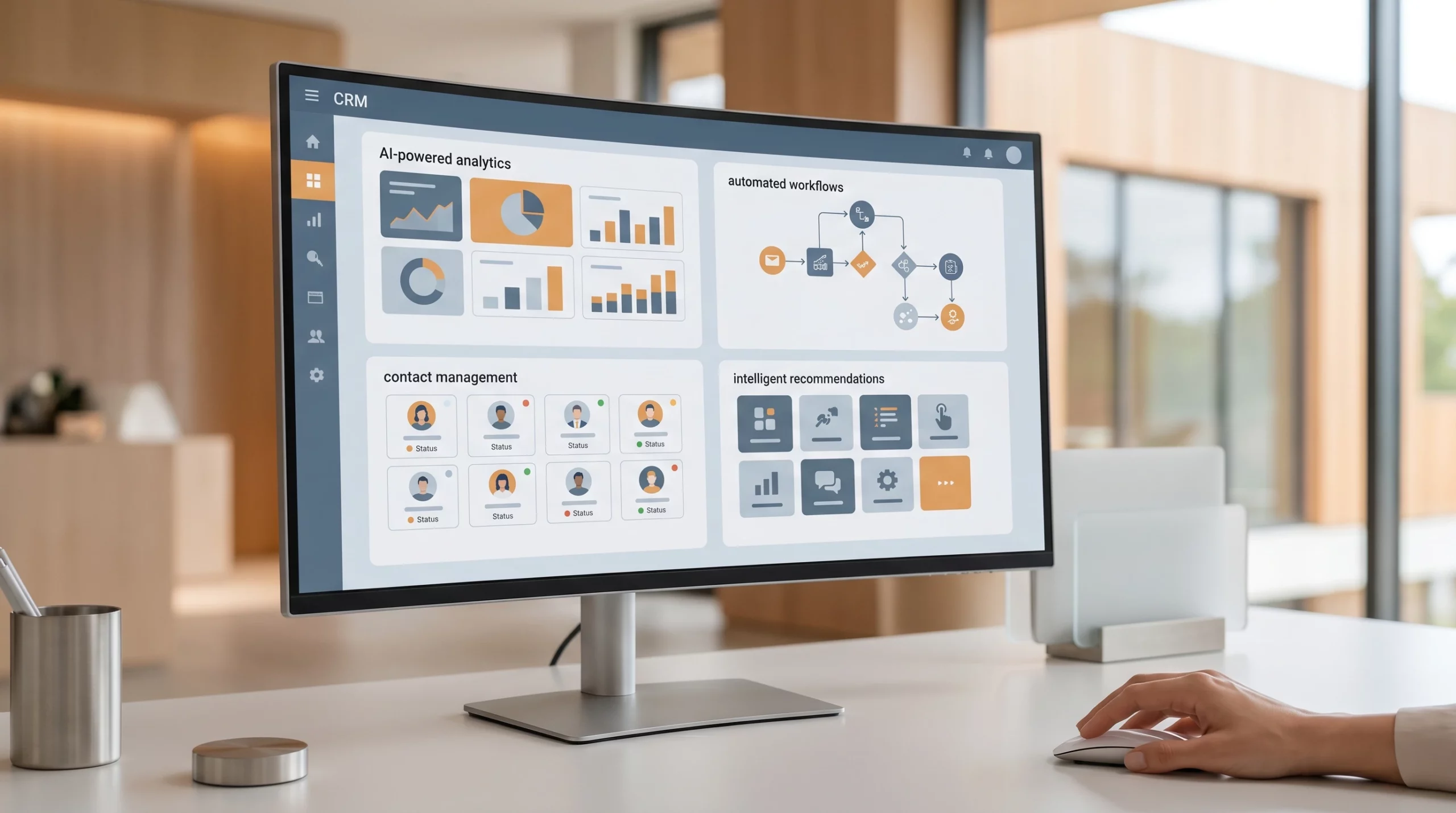
Custom CRM features with AI integration for small business automation
Implementation Strategy for Custom CRM Success
Successful custom CRM setup begins with thorough review of current business processes. Development teams must understand what you do today. They also need to know where you want to be in two or three years. This planning phase identifies integration needs and potential challenges before development begins.
Phased rollout approaches minimize disruption. Teams can adapt gradually to new workflows. Starting with core features and adding complexity over time helps ensure user adoption. It also maintains system stability. This strategy provides opportunities to refine features based on real-world usage before full deployment.
Complete training programs ensure team members can use all available features effectively. Ongoing support during the transition period helps address questions. Investment in proper training pays dividends through improved productivity and user satisfaction.
Change management strategies help overcome resistance. They build enthusiasm for new processes. For instance, involving key team members in planning and testing creates champions. These champions can help train and motivate their colleagues. Highlighting quick wins and immediate benefits helps maintain momentum during the setup period.
Performance monitoring and improvement continue long after initial deployment. Regular review of usage patterns and user feedback identifies opportunities for improvements. This iterative approach ensures your custom CRM continues delivering value as your business evolves.
Professional development opportunities arise as team members master new tools. Workers can explore different career paths within the expanding business. The CRM supports portfolio strategy development by tracking professional achievements. This creates mutually beneficial relationships between employee growth and business success.
ROI and Long-Term Value of Custom CRM Investment
Custom CRM development typically delivers measurable returns within 6-12 months. Improved efficiency and increased sales drive these results. Automated processes reduce labor costs. Better lead management increases conversion rates. Enhanced customer service often leads to higher retention rates and more referrals.
Productivity gains compound over time as teams become more skilled with improved workflows. The initial investment continues generating returns year after year. Faster task completion and reduced errors drive ongoing benefits. These efficiency improvements free up resources for growth initiatives rather than administrative tasks.
Competitive advantages emerge from having systems perfectly aligned with your business model. While competitors struggle with generic solutions, your team operates with tools designed for your market. This alignment often translates to faster response times and more personalized customer experiences.
Long-term cost savings result from eliminating subscription fees. Integration costs decrease and platform migrations become unnecessary. Ownership of your CRM means no unexpected price increases. There are no feature restrictions imposed by external vendors. These savings can go back into business growth or additional technology improvements.
Built-in growth features eliminate future technology roadblocks. Your CRM grows seamlessly with your business. You avoid costly replacements or major modifications. This stability provides a solid foundation for long-term strategic planning and sustained growth.
Companies in the United States and other markets see consistent benefits from custom CRM investments. The technology supports both short term wins and long-term career field development. Teams can focus on their best creative work while the system handles routine tasks.
Custom CRM systems represent more than technology investments. They become strategic assets that speed small business growth. Companies that choose custom development often outpace competitors who struggle with generic solutions. With proper planning, setup, and AI integration, your custom CRM becomes a powerful engine for sustainable business expansion.
Frequently Asked Questions
How long does it typically take to see ROI from a custom CRM investment?
Custom CRM development typically delivers measurable returns within 6-12 months through improved efficiency, increased sales, automated processes that reduce labor costs, better lead management that increases conversion rates, and enhanced customer service leading to higher retention rates.
What are the main problems with basic CRM solutions for growing businesses?
Basic CRM solutions often block business growth by forcing companies to change proven methods to fit rigid software rules. They include unnecessary features that waste time, lack customization options, create integration challenges with existing tools, cause data migration problems, and have generic interfaces that don't match real team workflows.
What essential features should every custom CRM include?
Essential custom CRM features include comprehensive contact management with complete customer profiles, automated lead tracking and scoring, sales pipeline management that reflects actual processes, integrated communication tools, advanced reporting and analytics, and mobile app functionality for field work and remote access.
How does AI integration transform custom CRM systems?
AI transforms custom CRMs by automating routine tasks like data entry and follow-ups, providing predictive analytics to identify high-conversion leads, enabling chatbots for 24/7 customer support, using machine learning to continuously improve performance, and helping with problem-solving by identifying patterns in customer issues.
What implementation strategy ensures custom CRM success?
Successful implementation requires thorough review of current business processes, phased rollout to minimize disruption, comprehensive training programs, change management strategies to overcome resistance, and ongoing performance monitoring with iterative improvements based on usage patterns and feedback.
How do custom CRMs help small businesses compete with larger organizations?
Custom CRMs level the playing field by providing AI-powered features that automate complex tasks, deliver intelligent insights from data patterns, enable proactive customer service through predictive analytics, and create perfectly aligned systems that often result in faster response times and more personalized customer experiences than generic solutions used by larger competitors.
What are the long-term cost benefits of custom CRM ownership?
Long-term benefits include eliminating ongoing subscription fees, reducing integration costs, avoiding platform migrations, preventing unexpected price increases, having no vendor-imposed feature restrictions, and eliminating future technology roadblocks as the system grows seamlessly with the business.
How should businesses prepare for custom CRM development?
Preparation involves mapping current business processes, identifying integration needs with existing tools, planning for 2-3 year growth projections, involving key team members in planning and testing to create champions, establishing change management strategies, and preparing comprehensive training programs for smooth user adoption.
Podcast Episode
Embed will be added when published
Video
Embed will be added when published
Ready to elevate your online presence? Contact OCImagine for a free consultation. We offer web design, app development, ecommerce solutions, and AI automation for businesses in Orange County and beyond.