

optometry website design helping an Orange County eye care practice welcome new patients
5 min read
This article explains why optometry website design directly influences whether patients book an exam or move on to a competitor, covering must-have features like online booking, insurance pages, and reviews. It also breaks down mobile-friendliness, local SEO, ADA/HIPAA compliance, and how to choose a web design partner suited for eye care practices, particularly in Orange County.
Most patients pick an eye doctor before they call. They decide based on your website. Good optometry website design turns searchers into booked exams. A weak site sends them to a competitor instead.
Why Optometry Website Design Decides Who Walks Through Your Door
Patients compare three or four eye care websites in minutes. So, first impressions happen online, not in your waiting room. If your site loads slowly, patients assume your care is outdated too.
A strong optometry practice website does more than look nice. It answers key questions early. Does it take my insurance? Can I book online? What eye care services do you offer?
Practices that answer these questions clearly turn more visitors into booked patients. Because the Orange County market is competitive, optometry website design orange county practices use must work harder than a basic template. It needs local relevance, fast load times, and content written for real patients.
Must-Have Features Every Optometry Practice Website Needs
An effective eye care website needs online booking, insurance details, service pages, and patient reviews. It also needs clear contact information. All of this should sit on a fast, mobile-friendly website.
- Online booking that works on any device
- Insurance and payment info listed plainly, not buried in a PDF
- Pages for each service, like eye exams, contact lens fittings, and dry eye treatments
- Before-and-after galleries for LASIK referrals or specialty lens fittings
- Patient reviews near the top of key pages
- A clickable phone number and map link on every page
Website content matters as much as design elements. For example, an “Eye Exam” page should explain what happens, how long it takes, and what to bring. This builds trust before the patient meets you.
Why Online Booking Changes Conversion Rates
Patients expect to book instantly, like booking a restaurant table. As a result, practices offering 24/7 online scheduling see fewer missed calls. They also fill more appointment slots.
| Feature | Patient Benefit | Practice Benefit |
|---|---|---|
| Online booking | Books anytime, no phone wait | Fewer no-shows, more appointments |
| Insurance info page | Confirms coverage before calling | Fewer unqualified calls |
| Service pages | Understands treatment options | Higher-value appointment requests |
| Patient reviews | Builds trust quickly | Higher conversion rate |
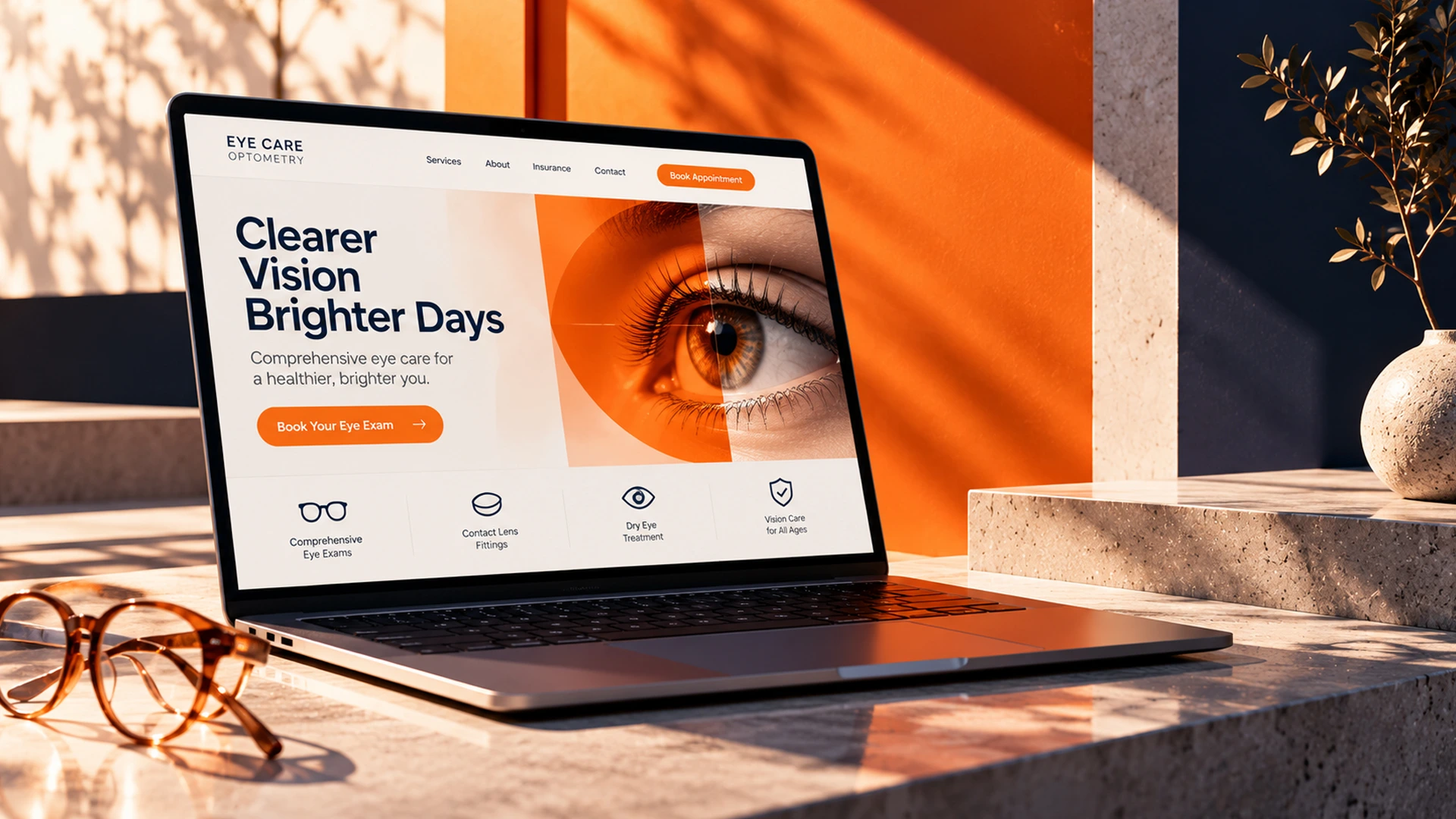
patient researching optometry practice website before booking an eye exam
Mobile-Friendly Website Design for Busy Patients
Many eye care searches happen on a phone. So a mobile-friendly website is not optional. It’s the baseline for any eye care website in 2026.
Responsive design adjusts your site to any screen size. Buttons stay easy to tap, and text stays readable without zooming. Because Google ranks mobile usability too, responsive design helps both user experience and SEO.
Common Mobile Mistakes to Avoid
Many optometry websites still use tiny forms or slow image galleries. These frustrate mobile visitors. Full-screen pop-ups on phones also drive patients away fast.
- Oversized images that slow load time
- Contact forms with too many required fields
- Menus that require pinching or zooming
- Click-to-call buttons that are missing or hard to find
Local SEO: Getting Found by Patients Searching Near You
Local SEO decides if your practice appears when someone searches “eye doctor near me.” Without it, even a great site stays hidden in search results.
Your Google Business Profile is the most important local SEO asset you own. Keep your hours, address, phone number, and photos current. Also, ask happy patients to leave reviews, since review volume and timing both affect rankings.
On-Page Local SEO Basics
Your website also needs local signals. First, include your city name in page titles and headers. Next, build a location page if you serve multiple areas. Finally, make sure your name, address, and phone number match across every directory.
- City-specific service pages (example: “Eye Exams in Irvine, CA”)
- Consistent name, address, and phone across all listings
- Embedded Google Map on the contact page
- Schema markup that identifies your practice as a local business
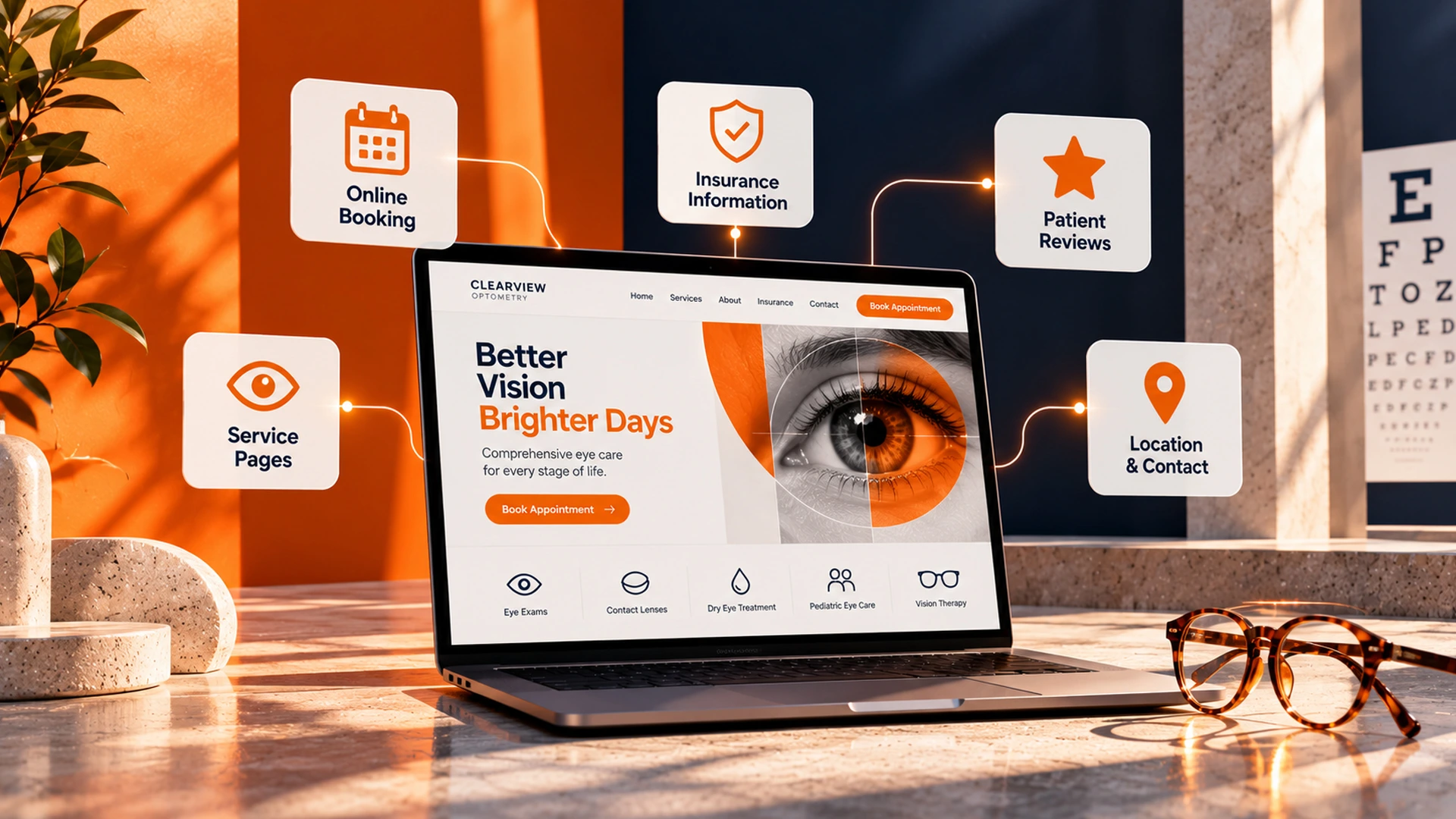
custom website features for optometry office website design including online booking
Building Trust With Reviews, Branding, and Patient Experience
Patients choose eye doctors carefully, often based on what others say. Patient reviews on your website build more trust than a clever tagline. They shape the patient experience before the first visit.
Branding matters too, but it should feel real, not corporate. Warm photos of your actual team, consistent colors, and a friendly tone all shape how a nervous first-time patient feels.
Calls-to-Action That Actually Convert
Every page needs a clear call-to-action, like “Book Your Eye Exam” or “Check Your Insurance.” Vague buttons such as “Learn More” rarely convert well. Instead, be specific about the next step.
ADA and HIPAA Basics for Eye Care Websites
Accessibility is not optional for healthcare sites. ADA compliance means your site works for screen readers, keyboard navigation, and color-blind-friendly contrast. Ignoring this creates legal risk and excludes real patients.
HIPAA awareness matters online too. Any form or chat tool that may collect health details needs secure handling. So, work with a developer who understands healthcare compliance.
- Alt text on all images for screen readers
- Strong color contrast for low-vision users
- Keyboard-friendly menus and forms
- Secure, HIPAA-aware contact and intake forms
OCImagine builds custom websites with accessibility and security in mind from day one. This pairs well with an AI appointment setting system that keeps patient intake smooth.
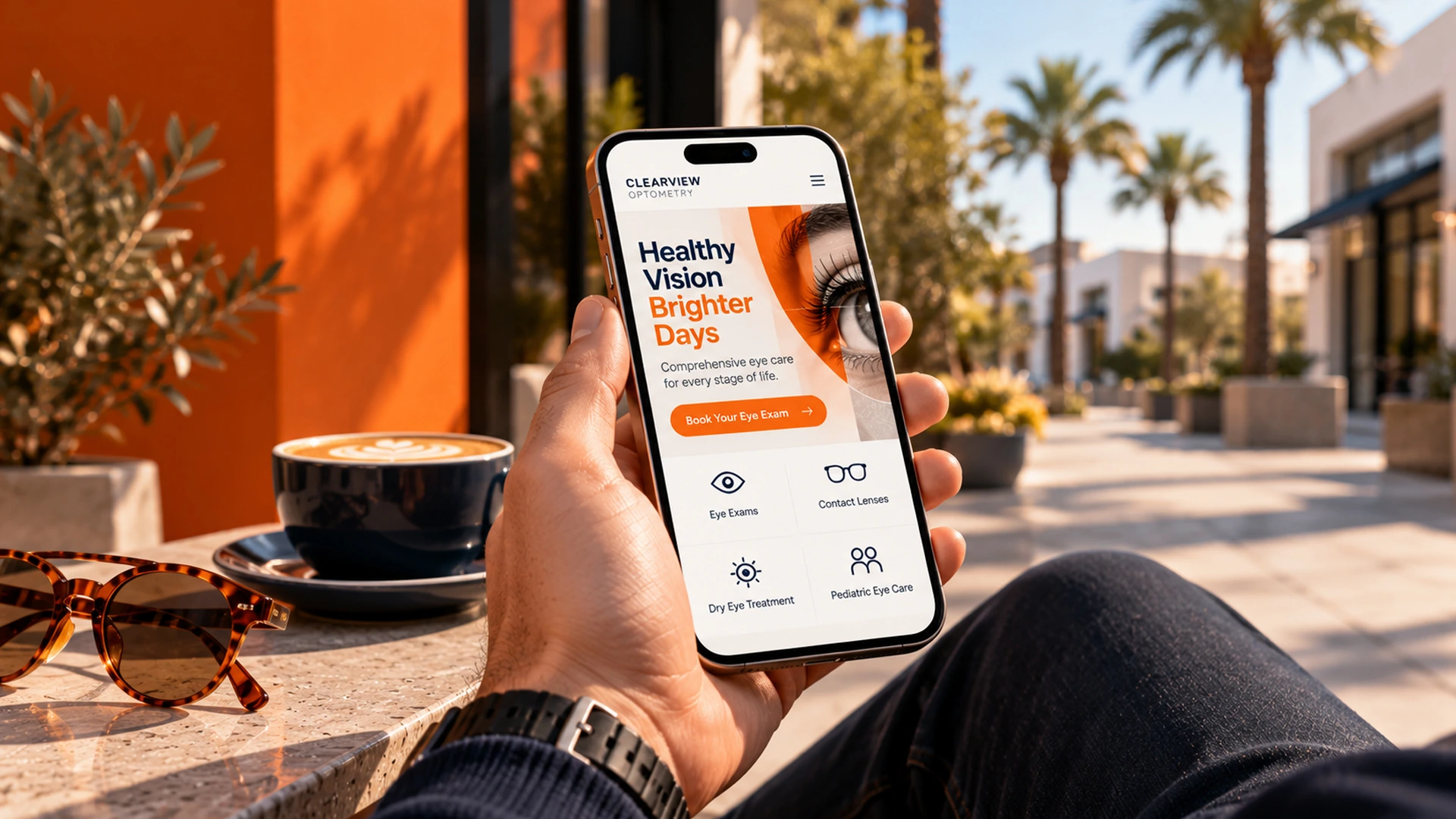
mobile-friendly website design for an optometry practice viewed on a smartphone
Choosing the Right Partner for Your Optometry Website Design
Not every web design agency understands healthcare marketing. So, look for a partner who has built eye care websites before. They should understand compliance and local SEO together, not as separate add-ons.
Ready to upgrade your optometry office website design? Explore OCImagine’s custom web design services built for practices that want more booked appointments, not just a pretty homepage.
Frequently Asked Questions
What features should an optometry website include?
An effective optometry website needs online booking available on any device, clearly listed insurance and payment information, individual pages for each service such as eye exams and dry eye treatment, patient reviews near the top of key pages, and a clickable phone number with map link on every page. Missing any of these tends to push patients toward a competitor's site instead.
Why is mobile-friendly design important for an optometry website?
Over half of eye care searches happen on a phone, so a responsive, mobile-friendly layout is now a baseline requirement rather than an optional upgrade. It ensures buttons are easy to tap, text stays readable without zooming, and online booking still works smoothly on small screens. Since Google also factors mobile usability into rankings, this supports both patient experience and SEO at the same time.
How does local SEO help an optometry practice get found online?
Local SEO determines whether a practice appears when someone searches phrases like 'eye doctor near me,' and without it even a well-designed website stays invisible in search results. Keeping your Google Business Profile current with hours, photos, and recent reviews is the single most important local SEO asset. Beyond that, city-specific service pages, consistent name/address/phone details across listings, and schema markup all strengthen local visibility.
Does an optometry website need to be ADA and HIPAA compliant?
Yes, accessibility and compliance are not optional for healthcare websites. ADA compliance means the site works for patients using screen readers, keyboard navigation, or color-contrast settings, while HIPAA awareness applies to any contact form, patient portal, or chat widget that could collect health information. Working with a developer who understands healthcare compliance, rather than just general web design, helps practices avoid legal risk and costly retrofits later.
How does online booking affect new patient appointments?
Online booking lets patients schedule instantly instead of waiting for business hours or a callback, which removes friction at the exact moment they're ready to commit. Practices offering 24/7 online scheduling report fewer missed calls and more filled appointment slots. Combined with clear insurance information, it also reduces unqualified calls by letting patients confirm coverage before they ever pick up the phone.
What should I look for in a web design agency for my eye care practice?
Look for a partner who has experience building eye care or healthcare practice websites and understands medical compliance and local SEO together, not as separate services. Ask how they handle online booking integrations, insurance pages, and ongoing SEO support after launch, since a one-time build without continued maintenance tends to fall behind as search algorithms and patient needs evolve.